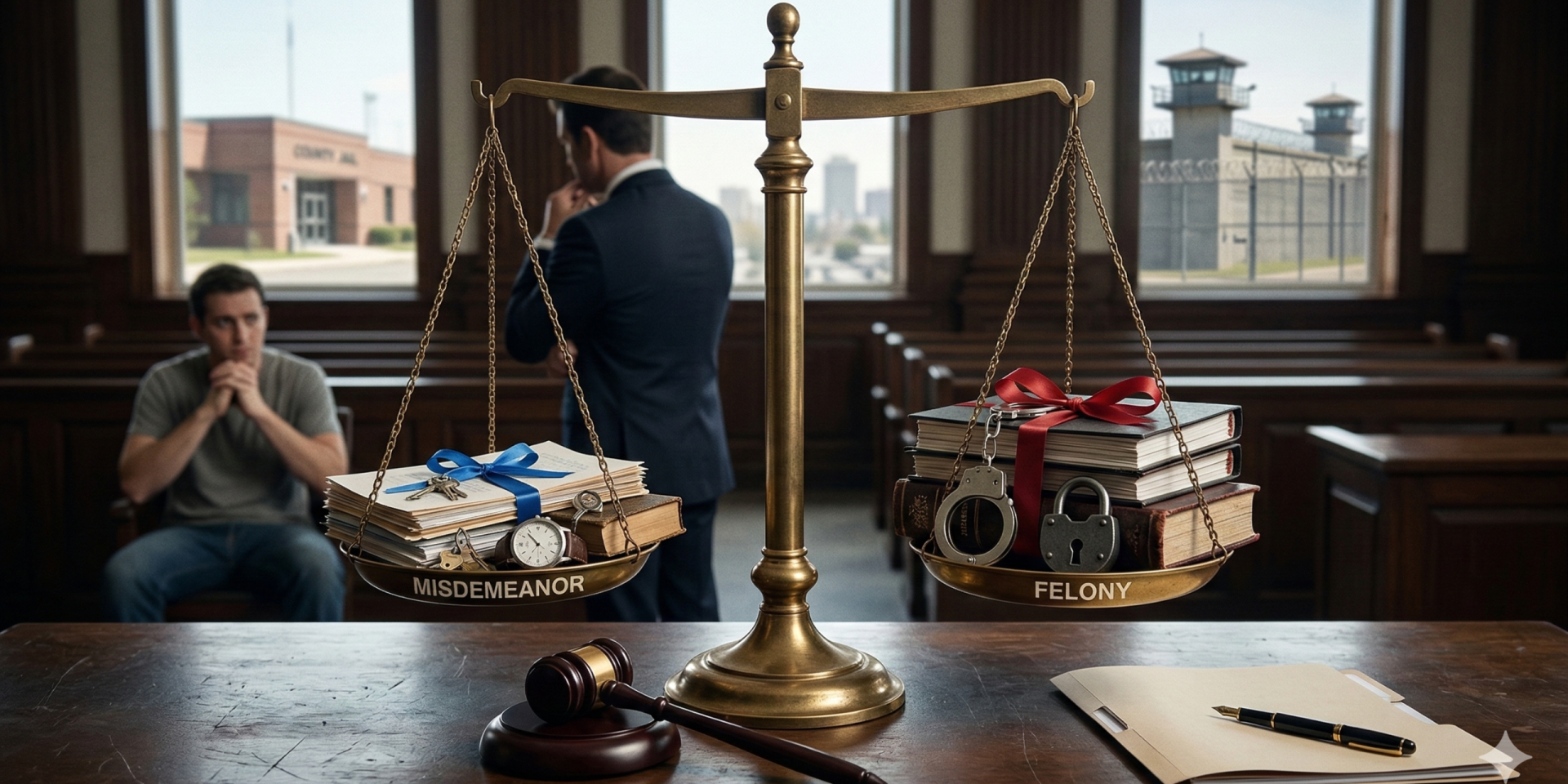
Misdemeanor vs. Felony in California: What’s the Real Difference?
If you find yourself or a loved one entangled in the California legal system, the terminology can feel like a foreign language. Perhaps the most critical distinction you will encounter early on is whether a crime is classified as a misdemeanor or a felony.
While many people assume a misdemeanor is “no big deal” and a felony is life-ending, the reality is far more nuanced. In California, both classifications carry the weight of a criminal record, but the immediate penalties and long-term consequences differ significantly. As a Fresno criminal lawyer, I believe that navigating these charges requires more than just knowing the definitions—it requires a strategic defense tailored to the specific level of the offense.
In this guide, we will break down the legal differences, the impact on your civil rights, and how a defense attorney can help mitigate the damage to your future.
What is a Misdemeanor in California?
Under California law, a misdemeanor is a crime that is considered more serious than a simple infraction (like a speeding ticket) but less severe than a felony.
Standard vs. Aggravated Misdemeanors
Not all misdemeanors are created equal. California generally categorizes them into two groups:
- Standard Misdemeanors: These are punishable by up to six months in county jail and a fine of up to $1,000. Common examples include public intoxication, petty theft (under $950), and disorderly conduct.
- Aggravated (or Gross) Misdemeanors: These carry a higher maximum sentence of 364 days in county jail and may involve higher fines. Examples often include DUI without injury, certain domestic battery charges, and violating a restraining order.
It is important to note that as of recent years, California law capped misdemeanor sentences at 364 days (rather than a full year) to help non-citizens avoid certain automatic federal immigration consequences, such as deportation.
What is a Felony in California?
A felony is the most serious category of crime. These offenses involve conduct that is deemed significantly harmful to society, such as violent crimes, large-scale thefts, or serious drug offenses.
Felony Penalties
The penalties for a felony are substantially harsher than those for a misdemeanor:
- Incarceration: Unlike misdemeanors, which are served in county jail, felony sentences are typically served in California State Prison.
- Sentencing Ranges: Most California felonies have a “triad” of sentencing options (low, middle, and high terms). For example, a crime might be punishable by 2, 3, or 4 years in prison, depending on the circumstances.
- Fines: Felony fines can reach $10,000 or more, in addition to mandatory restitution to victims.
The “Wobbler”: A Critical Opportunity for Defense
One of the most unique aspects of California law is the “wobbler.” A wobbler is a crime that can be charged as either a misdemeanor or a felony at the prosecutor’s discretion.
Common wobblers include:
- Assault with a deadly weapon
- Grand theft
- Corporal injury on a spouse
- Certain fraud or white-collar crimes
When a prosecutor is deciding how to file a wobbler, they look at two things: the severity of the facts and the defendant’s criminal history. This is where a skilled defense attorney is indispensable. We can often present mitigating evidence early in the process to convince the District Attorney to file the case as a misdemeanor rather than a felony, or petition the judge to reduce a felony to a misdemeanor during sentencing or after probation is completed.
Collateral Consequences: The Hidden Costs
The difference between a misdemeanor and a felony isn’t just measured in jail time. The “collateral consequences”—the ways a conviction affects your life outside of court—are often where the real damage is done.
1. Firearm Rights
In California, a felony conviction results in a lifetime ban on owning or possessing firearms. While most misdemeanors do not carry this penalty, certain “prohibited” misdemeanors (like domestic violence or certain assault charges) can result in a 10-year or lifetime ban.
2. Employment and Licensing
Many employers are willing to overlook a minor misdemeanor, but a felony conviction on a background check can be a “red flag” that prevents you from securing high-level employment. Additionally, professional licenses (nursing, real estate, law) are much harder to obtain or keep with a felony on your record.
3. Voting and Jury Service
While California has expanded voting rights for many former offenders, a felony conviction can still impact your eligibility to serve on a jury, a fundamental civic duty.
4. Immigration Status
For non-citizens, the distinction is vital. A felony—and even certain aggravated misdemeanors—can be classified as an “aggravated felony” or a “crime of moral turpitude” under federal law, leading to mandatory deportation, even for legal permanent residents.
How a Fresno Criminal Lawyer Protects Your Future
Whether you are facing a first-time misdemeanor or a serious felony, the goal of your defense attorney remains the same: to achieve the best possible outcome. This often involves a multi-step approach:
- Investigation: We look for flaws in the police report, constitutional violations, or evidence that the crime was overcharged.
- Negotiation: If the evidence is strong, we work to negotiate a plea deal that reduces a felony to a misdemeanor or allows for a “diversion program.” In many misdemeanor cases, successful completion of a program can lead to the charges being dismissed entirely.
- Trial: If the prosecution refuses to be reasonable, we are prepared to take the case to a jury to fight for an acquittal.
At the Law Office of Mark Broughton, we understand that a criminal charge is often the most stressful event in a person’s life. We provide high-quality legal services across a range of issues, including:
- Aggressive felony representation
- Misdemeanor defense and diversion
- Wobbler reductions (PC 17b motions)
- Expungements to clear your past record
FAQ: Misdemeanor vs. Felony in California
Can a felony be changed to a misdemeanor later?
Yes. Under California Penal Code 17(b), if you were convicted of a wobbler felony and granted probation, you may be eligible to have the conviction reduced to a misdemeanor after you successfully complete your probation.
Do misdemeanors show up on background checks?
Yes. Both misdemeanors and felonies will appear on a standard criminal background check unless they have been expunged (dismissed) by a court.
Is jail time mandatory for a misdemeanor?
Not always. Many first-time misdemeanor offenders are eligible for probation, community service, or electronic monitoring in lieu of actual jail time.
What is a “wobblette”?
In California, some minor offenses can “wobble” between a misdemeanor and an infraction. These are often referred to as “wobblettes” and include things like disturbing the peace or trespassing.
Don’t Let a Charge Define Your Future
The legal system moves fast, and the decisions made in the days following an arrest are often the most important. Whether you are facing a misdemeanor or a felony, you need a defense attorney who understands the local courts in Fresno and knows how to fight for a reduction or dismissal.
Mark Broughton has decades of experience defending the residents of Fresno and the Central Valley against everything from minor thefts to complex felonies. We know the stakes, and we know the law.
Contact Mark Broughton Today
If you have been charged with a crime, don’t wait to see what happens. Take control of your defense now.
Call the Law Office of Mark Broughton at (559) 441-1907 or visit our website at FresnoCriminalLawyer.com to schedule your consultation.