California Juvenile Justice: How Youth Cases Differ From Adult Cases
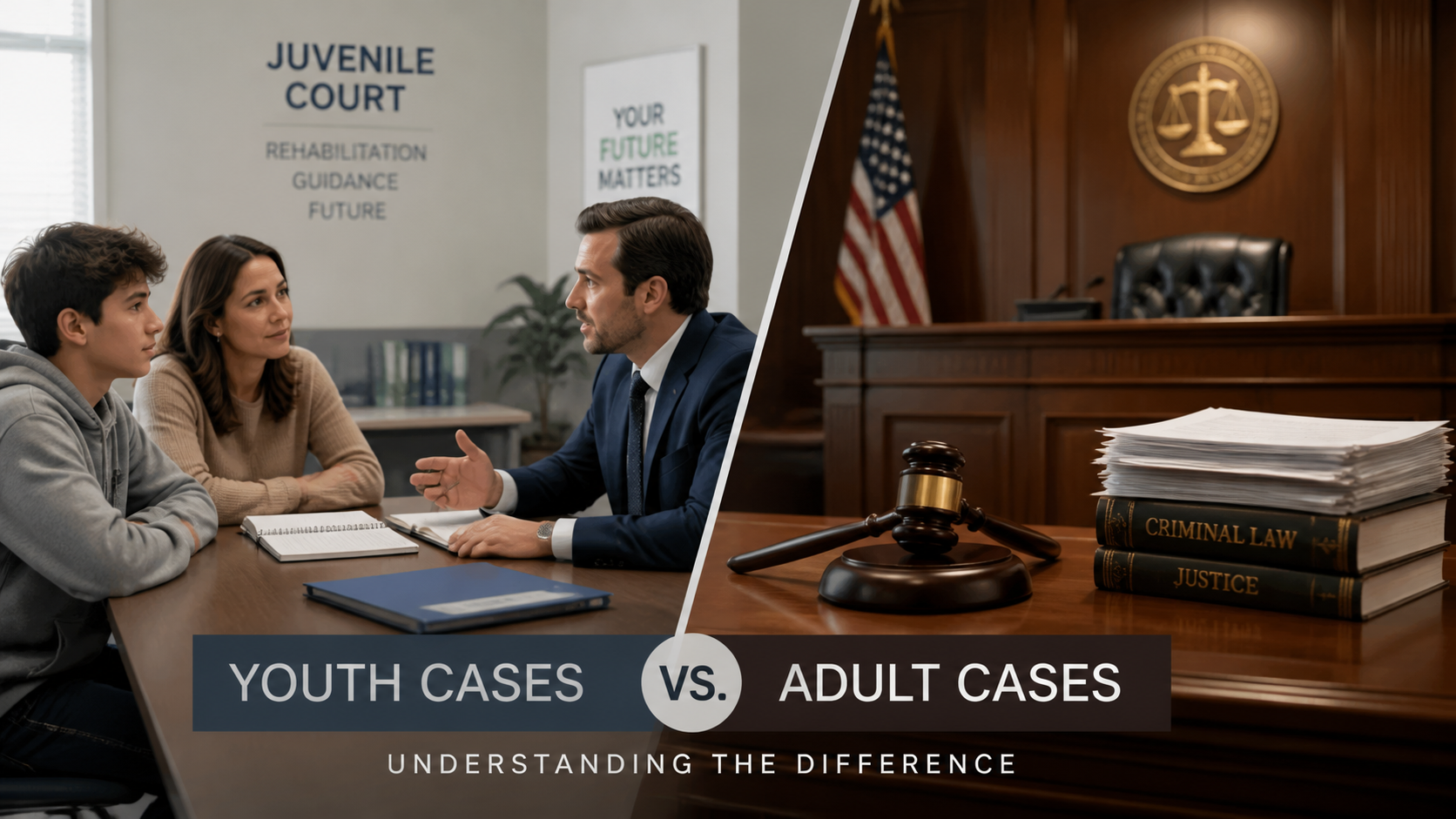
California juvenile cases are handled very differently from adult criminal cases, especially when the court is focused on rehabilitation rather than punishment. For families facing a juvenile arrest, understanding those differences can help them respond quickly and protect a young person’s future.
Why Juvenile Cases Are Different
California’s juvenile justice system is designed around the idea that young people are still developing and may benefit more from guidance, treatment, and education than from punishment alone. The system is built to handle youth under age 18 and typically involves county probation departments, juvenile courts, and community-based services.
Adult criminal cases, by contrast, are structured more around punishment, deterrence, and formal sentencing. That difference affects everything from how a case begins to what happens after a finding of responsibility or guilt.
Age And Jurisdiction
The first major difference is age. In California, a juvenile is generally a person who was under 18 at the time of the offense, and those cases usually start in juvenile court.
Adult court applies to people 18 and older, but some serious juvenile cases can be transferred to adult court depending on the age of the minor and the nature of the alleged offense. California law allows certain serious cases involving older teens to be handled in adult court after a transfer hearing in some situations.
Court Process
Juvenile court uses a process that is different from the adult criminal process. Juvenile matters are typically called petitions, and the court focuses on the youth’s needs, risk factors, and rehabilitation plan rather than imposing a traditional criminal conviction.
Adult cases are more formal in the conventional criminal sense, with arraignments, plea bargaining, trials, and sentencing rules that are usually more rigid. Juvenile court still takes the allegations seriously, but the procedure is built to give the court more flexibility in handling a young person’s case.
Sentencing And Outcomes
One of the biggest differences is what happens after the case is resolved. Juvenile court generally offers more flexible dispositions, such as probation, counseling, community service, supervision, and treatment-based programs. The goal is to help the youth improve and avoid future justice-system involvement.
Adult sentencing is usually harsher and more fixed. It can include jail or prison, fines, probation, and other penalties that are meant to punish the offense and deter future conduct.
Records And Confidentiality
Juvenile cases are usually more private than adult cases. That confidentiality is meant to protect minors from long-term stigma and give them a better chance to move forward without a public criminal record following them into adulthood.
Adult criminal records are generally more accessible to the public. That difference matters because a juvenile case may have fewer lasting consequences than an adult conviction, though it can still affect school, immigration, employment, and future legal issues.
Detention And Placement
If a youth is detained, the case usually involves county juvenile hall, home supervision, or another local placement option rather than the adult jail system. California’s juvenile system is decentralized, meaning counties play a major role in detention and supervision.
In more serious cases, a youth may face placement in a secure facility or other higher-level intervention, depending on the facts of the case and the court’s findings. California has also moved toward community-based responses for many youth cases, reserving more secure placements for higher-risk situations.
When A Youth Can Be Tried As An Adult
Some juvenile cases can be transferred to adult court, especially when the allegations are serious and the minor is older. California law allows a district attorney to seek transfer in certain cases, and a judge may decide whether the case should stay in juvenile court or move to adult court after a hearing.
This is one of the most important parts of the process because adult court exposure can significantly increase the stakes. A transfer can change the possible sentence, the placement options, and the long-term consequences of the case.
Why Early Defense Matters
A juvenile case should never be treated as “just a kid’s case.” Even when the court system is more rehabilitative, the consequences can still be serious, especially if the case involves detention, probation terms, restitution, or a possible transfer to adult court.
That is why it is important to act early, review the allegations carefully, and build a defense strategy that fits the youth’s age, record, and circumstances. In the right case, a lawyer may be able to challenge the allegations, seek a better disposition, or argue against transfer to adult court.
How Mark Broughton Can Help
Mark Broughton can help families facing juvenile charges by reviewing the case, explaining the process, and protecting the young person’s rights from the beginning. He can also help with court appearances, negotiation, and defense strategy in cases involving detention, probation, or serious allegations.
When a juvenile matter could have lasting consequences, having a criminal defense lawyer who understands California court procedure can make a real difference. Mark can work to reduce risk, pursue favorable outcomes, and guide families through a stressful process with clear communication and focused representation.
FAQ
What Is The Main Difference Between Juvenile And Adult Cases?
Juvenile cases focus more on rehabilitation and privacy, while adult cases focus more on punishment and formal sentencing.
Can A Juvenile Case Become An Adult Case?
Yes. In some serious cases, a youth may be transferred to adult court after a legal process and judicial review.
Are Juvenile Records Public?
Juvenile records are generally more confidential than adult criminal records.
What Happens If A Youth Is Detained?
The youth may be held in a county juvenile hall or placed under another juvenile supervision option while the case moves forward.
Do Juvenile Cases Still Matter Later?
Yes. Even though juvenile court is different from adult court, the case can still affect school, work, and future legal issues.
Contact Mark Broughton to discuss a juvenile case and get guidance on the next steps.